The New Aldo Frattini Bivouac
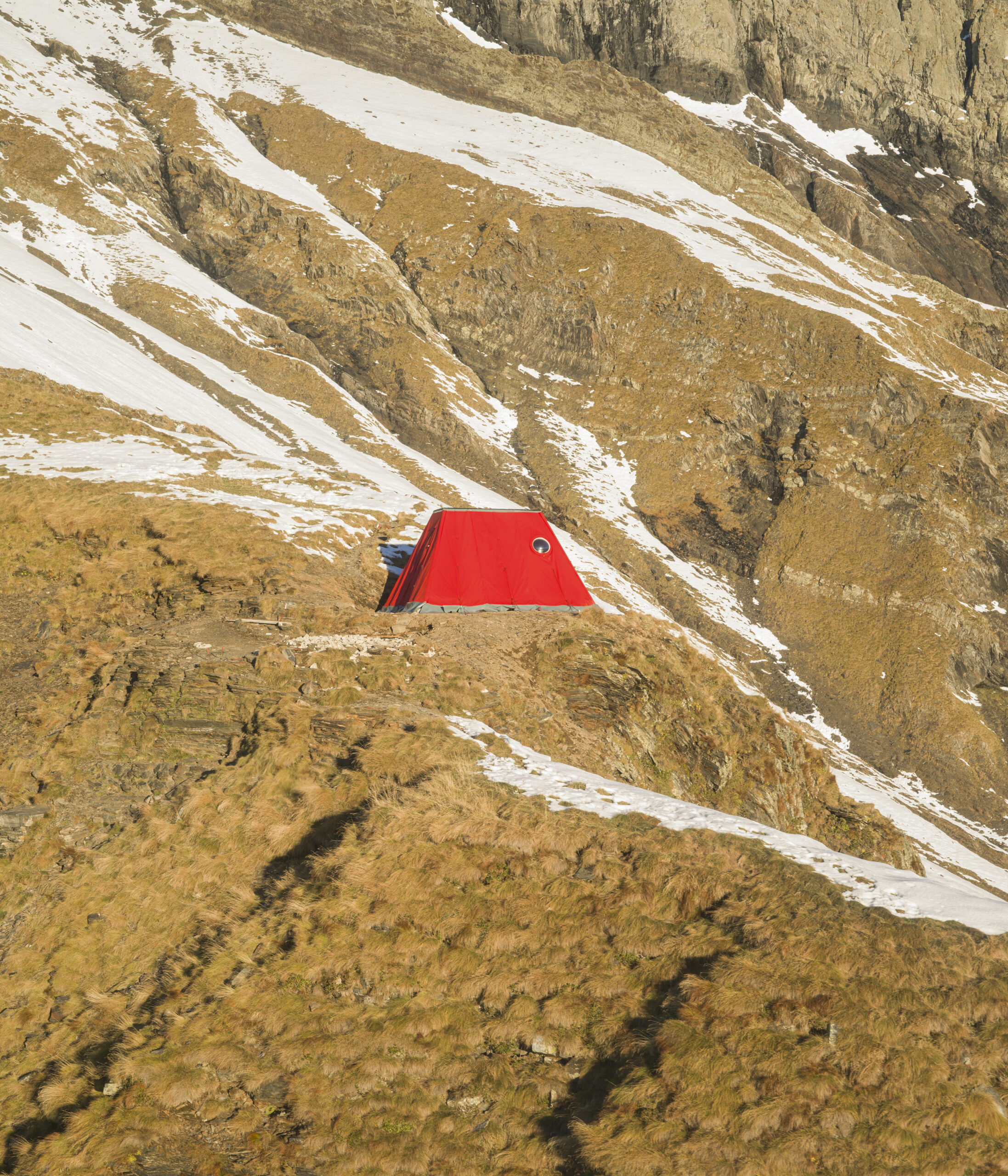
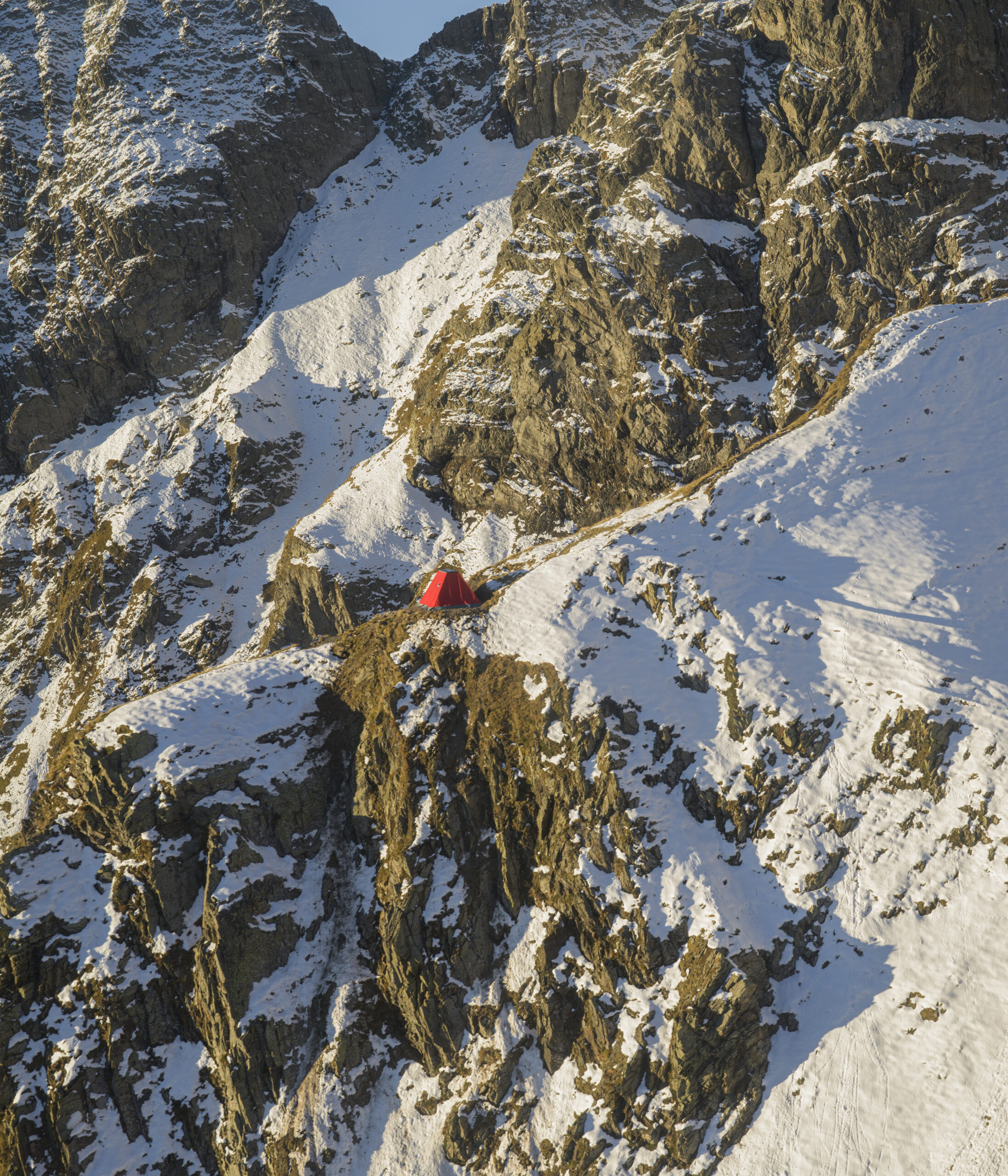
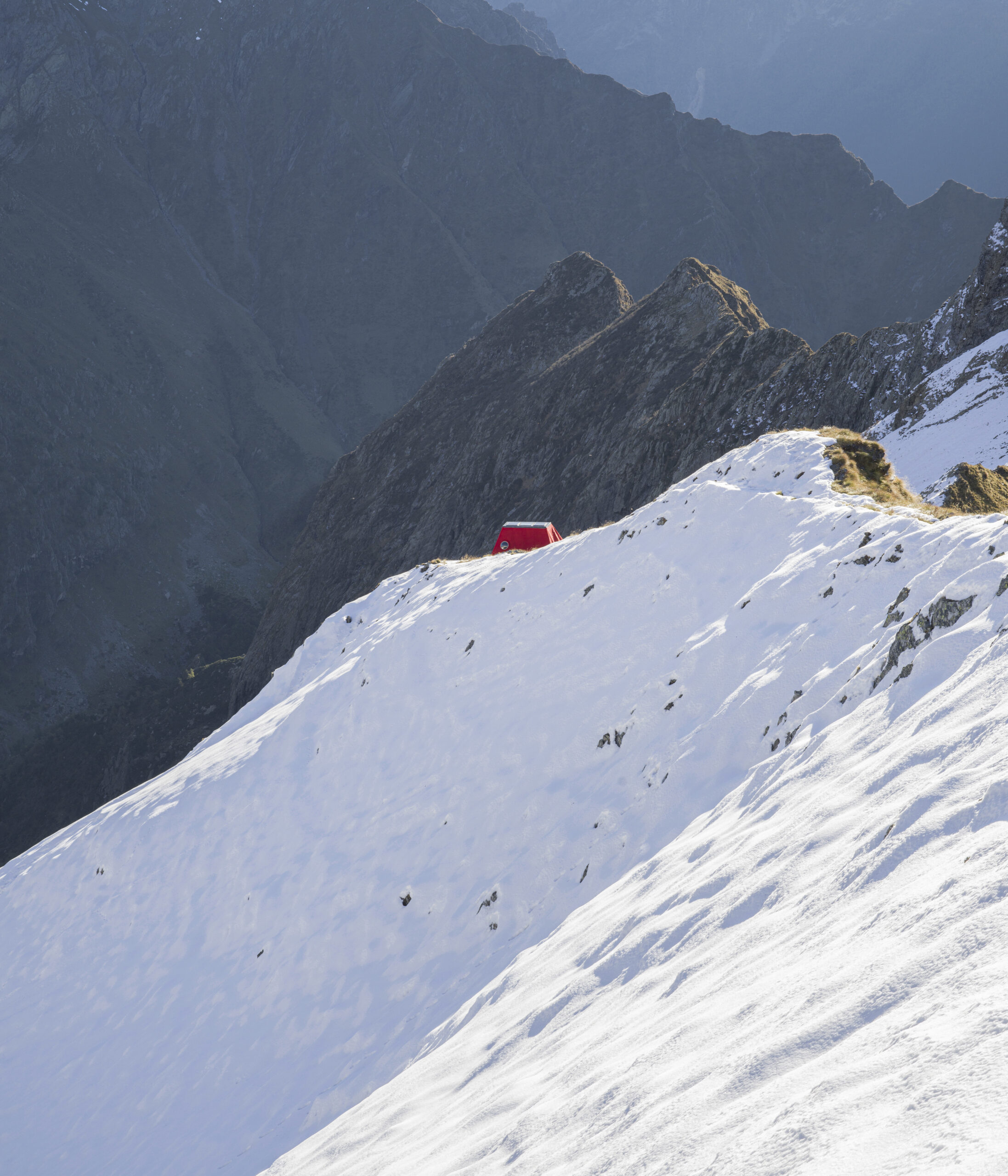
The new Aldo Frattini Bivouac stands at 2,300 meters along the Alta Via delle Orobie in Val Seriana, the result of a collaboration between GAMeC and the Bergamo section of Club Alpino Italiano, within the framework of Pensare come una montagna – Il Biennale delle Orobie (2024-2025). Designed by EX., a research and design laboratory uniting art, landscape, and sustainable technology through architecture, the project addresses a fundamental question: what does it mean for a cultural institution to extend into remote territory?
The original bivouac was erected in 1970. After being destroyed by avalanche in 1972, it was rebuilt in 1975 in a safer position between Pizzo del Diavolo and Pizzo Tendina. The reconstruction project responds to the aging structure’s need for replacement while fundamentally rethinking alpine architecture principles in an era of ecological fragility. The bivouac continues EX.’s research trajectory on alpine shelters, begun with the Corradini and Berrone bivouacs in the Piedmont Alps, deepening exploration of reversibility and landscape integration.
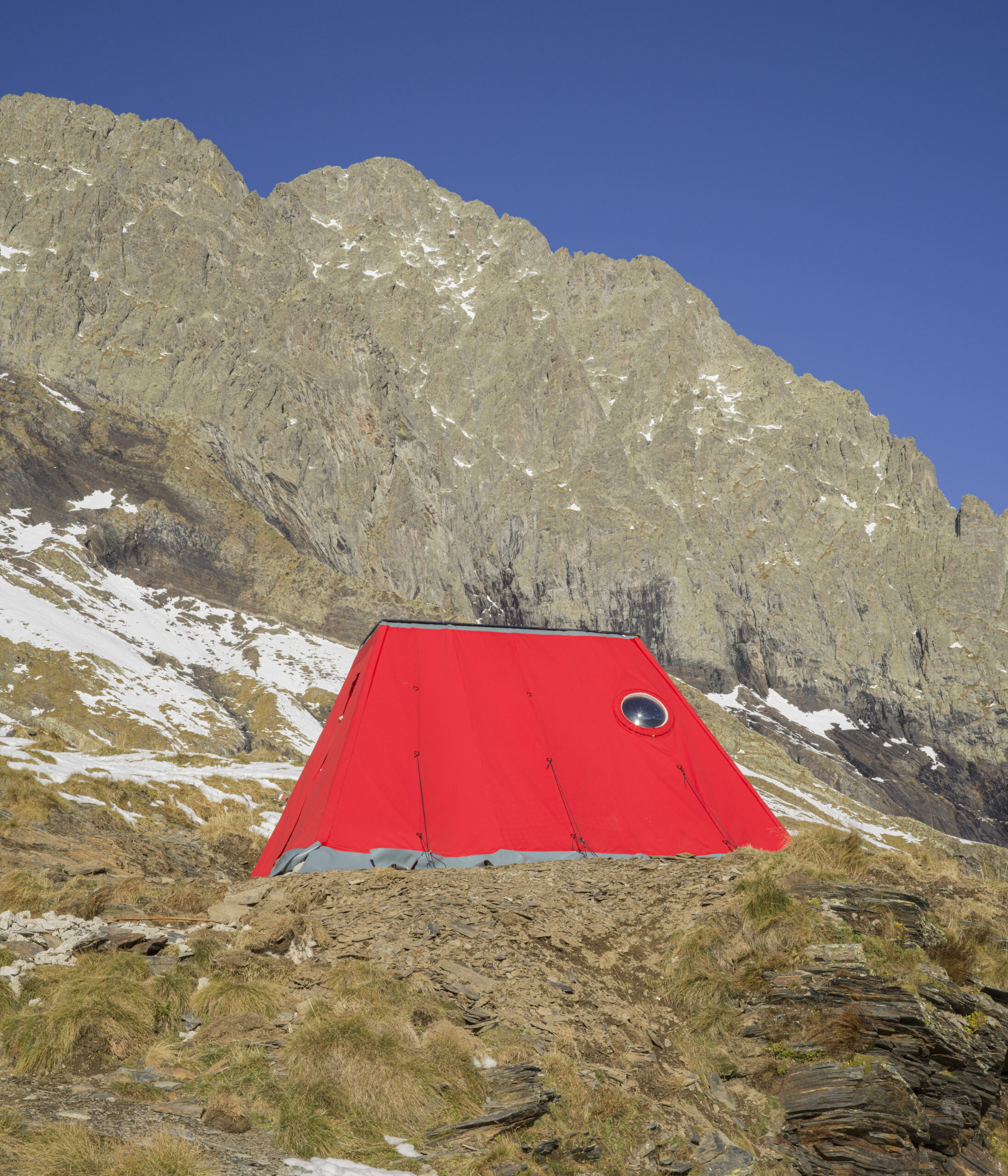
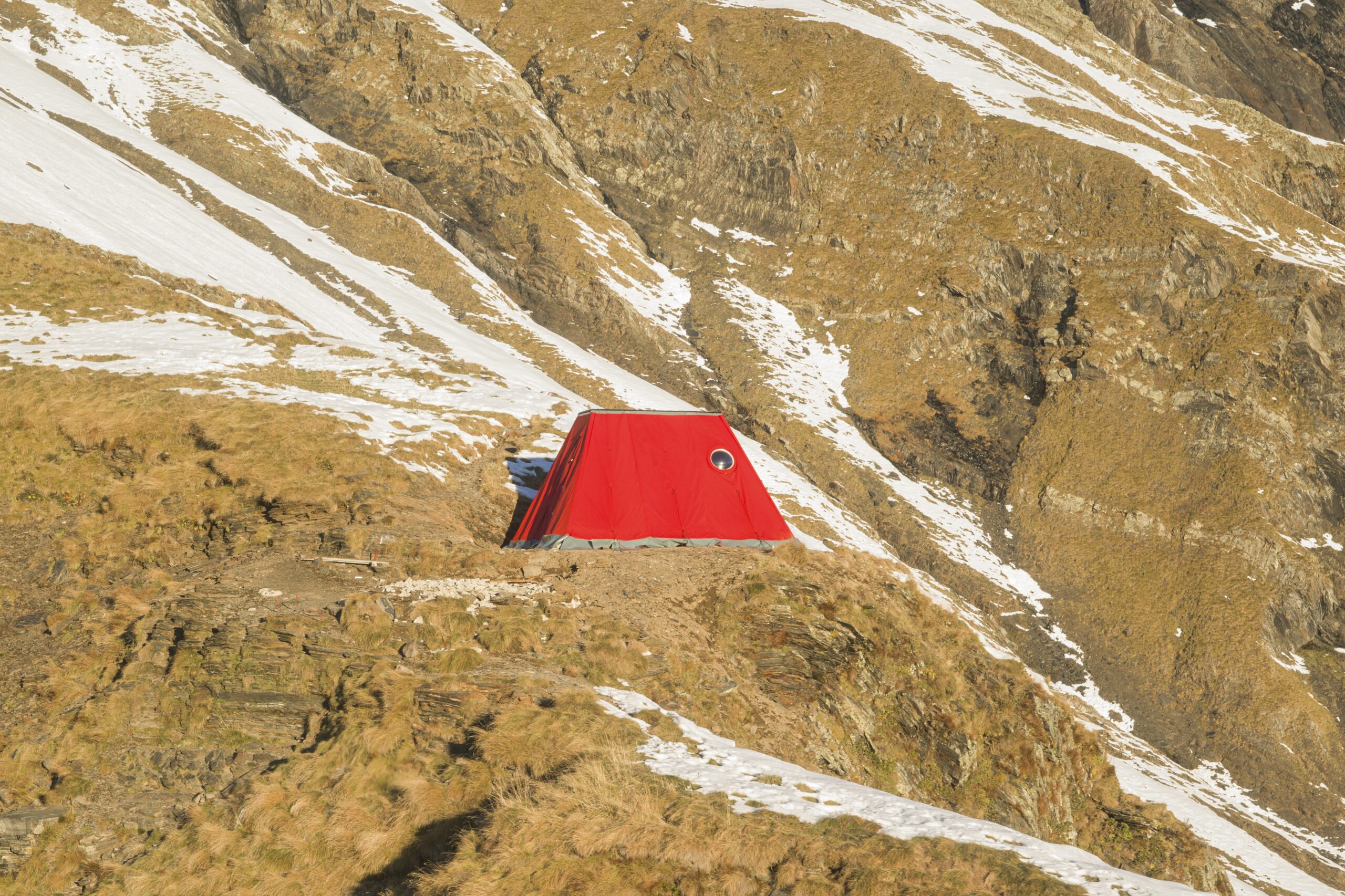
The design is conceived as a light, reversible, technological refuge. Its form recalls the alpine tent, evoking early high-altitude dwelling explorations while reducing environmental impact to an absolute minimum. The bivouac acknowledges impermanence and adaptability as essential qualities—not a completed object but a living structure capable of responding to extreme mountain conditions.
The structure represents the first permanently installed textile emergency architecture in alpine environments—an experimental prototype merging sustainability, rapid assembly, and spatial optimization. Realized in collaboration with Ferrino, the historic Italian outdoor equipment company specializing in outdoor equipment, it is clad in an innovative textile “skin” highly resistant to atmospheric agents. Despite compact dimensions (3.75 x 2.60 x 2.60 meters), it accommodates up to nine people. The chamfered shell form reflects meticulous attention to functionality and minimal ground impact.
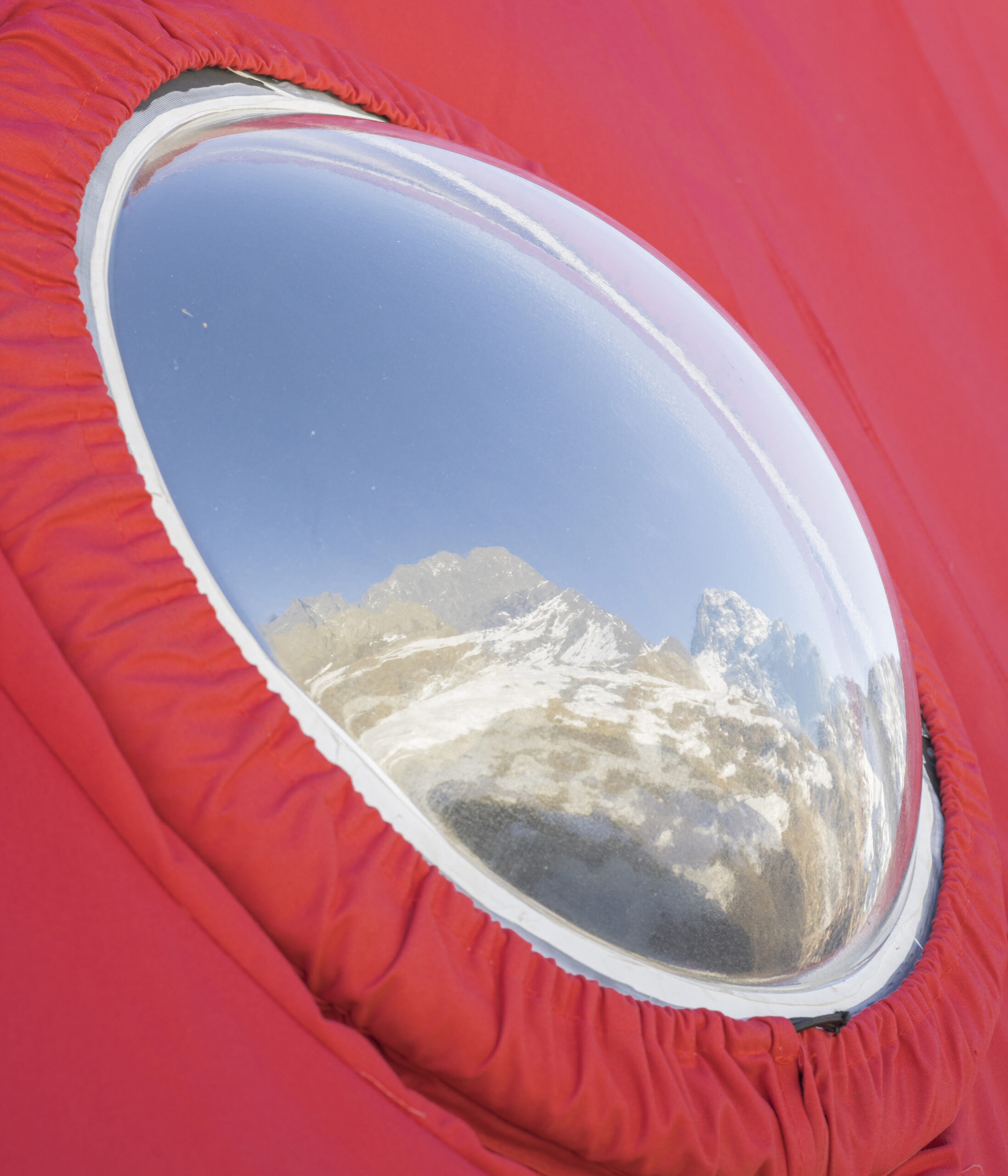
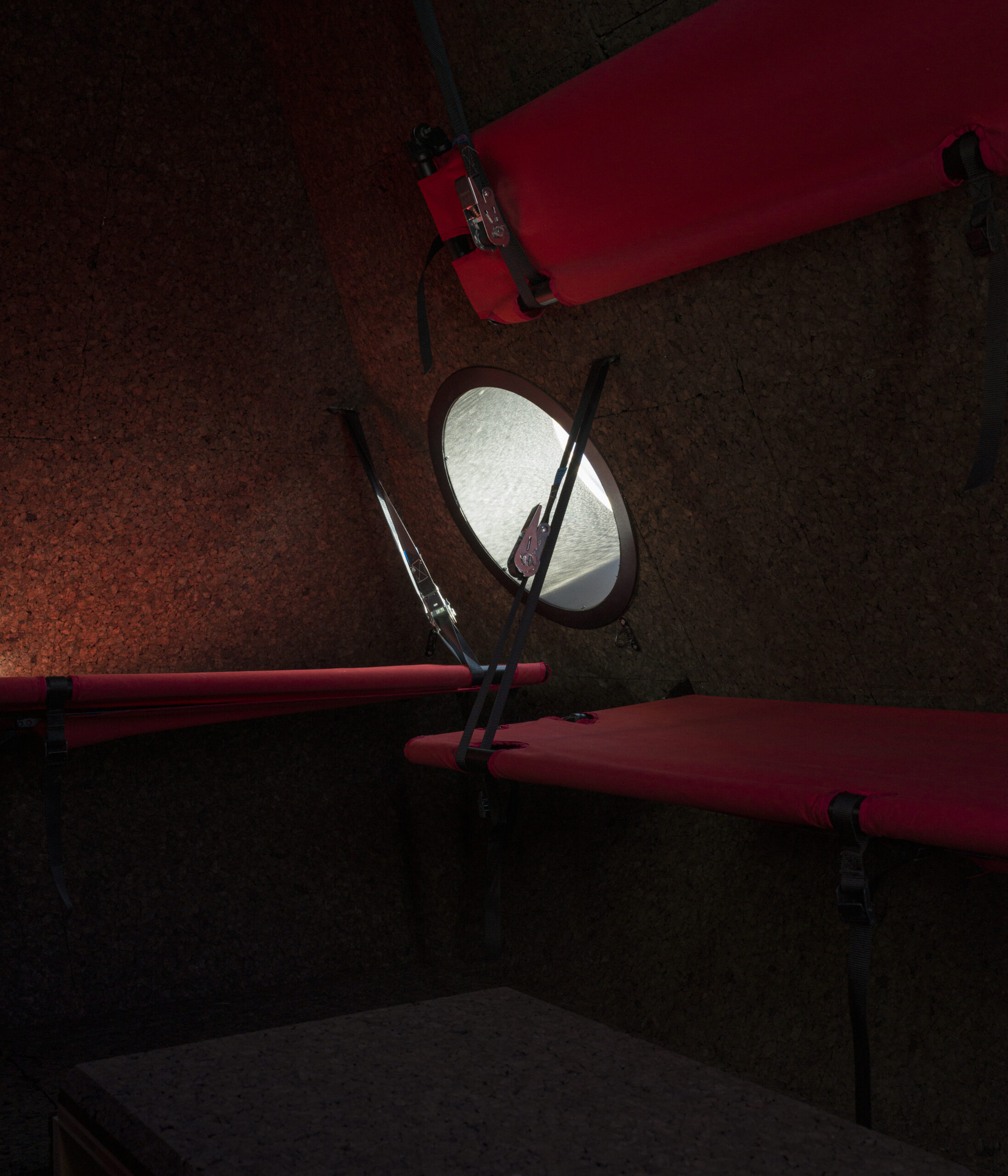
Interior cork cladding provides thermal and acoustic insulation, creating an intimate, collected atmosphere. Zenithal lighting, muffled silence, and light filtering through a skylight and two panoramic portholes produce a suspended, almost meditative experience. Foldable benches inspired by mountaineering portaledges convert into sleeping platforms—a solution evidencing the bivouac’s double nature as refuge and survival instrument in extreme environments. The construction system, developed ad hoc and executed by Abitare Legno S.r.l., required specialized engineering for prefabrication, facility pre-assembly, and high-altitude installation.
The bivouac’s differentiation from other alpine refuges resides in its dual function: fully operational as shelter for mountain traversers while simultaneously serving as research infrastructure. Equipped with environmental sensors, it gathers real-time data on the surrounding alpine ecosystem—climate conditions, landscape transformations, visible and invisible signals crossing these apparently remote spaces. This information transmits to GAMeC as living material for future projects, testimony to ongoing environmental mutations, foundation for narratives interweaving scientific research and artistic languages. The bivouac operates as an active environmental monitoring and care tool, extending the concept of fragility to include responsibility and observation while activating information flow between mountain and city.
The red textile covering embraces fragility as aesthetic, refusing the bivouac’s conception as immaculate object. This covering declares vulnerability: lightweight, provisional, open to change. The structure is positioned not to dominate but to serve those who walk, study, and observe. It maintains its original shelter function while becoming symbolic and cultural value—an aesthetic experience in dialogue with alpine passage, a permanent outpost for GAMeC in high altitude.
Supported by Fondazione Cariplo and Fondazione della Comunità Bergamasca, the new Aldo Frattini Bivouac materializes GAMeC’s commitment to sustainability and territorial reflection on the role of artistic institutions in landscape contexts. The project proposes a new modality of inhabiting high altitude: not to dominate but to listen; not to construct for permanence but to design for the possible. An architectural and cultural gesture opening new horizons on the role of architecture and contemporary creativity in remote landscapes.
.
Ph: Tomaso ClavarinoDate
January 9, 2026